
If you conducted a survey of 10,000 landscape photographers and asked them what their favourite time of year was, a healthy proportion would say Winter – and honestly, it’s hard to disagree. Yes, Autumn gets all the glory with its glorious changing colours… But Winter? Winter is where the real magic happens.
The light is lower, the shadows are longer, and then there’s the mist… The combination of cold nights, damp air, and those first pale rays of a winter sunrise produces some of the most atmospheric conditions you’ll ever photograph in. Add in the possibility of a hoar frost, frozen floodwater on the Levels, or a cloud inversion from the Mendips, and you start to understand why Winter is many landscape photographers’ best kept secret.
In this guide I’ll share my favourite Winter photography locations in Bristol, Somerset and the surrounding area – from familiar spots that take on a whole new character in the cold months, to a few that are at their absolute best when everyone else has retreated indoors.
If I’ve missed any of your favourites, let me know in the comments below.
Why Winter is great for photography
Before we get into the locations, a few reasons why Winter deserves more love than it gets:
The light is incredible. The sun never gets very high in the sky during Winter, which means the golden hour lasts much longer – you get that warm, low, raking light for a bigger window of time than any other season.
Mist and fog are far more common. Cold nights followed by milder mornings are the classic recipe for a misty dawn, and this combination happens far more frequently in Winter than Summer. Keep your eye on the forecast and be ready to move fast.
Hoar frosts transform everything. A hard frost overnight can coat every leaf, branch, and blade of grass in a layer of white crystals — and in the right light, it’s absolutely stunning. Leigh Woods and Ashton Court in particular are magical in these conditions. The Mendips, which through its exposed position, can turn into a winter wonderland.
Fewer people. The early alarm feels brutal in December, but the payoff is that you’ll often have locations entirely to yourself. Just you and the light. Sunrise is a bit later this time of year, but people are less eager to venture out.
Starling murmurations. One of the great natural spectacles of the British winter, and the Somerset Levels is one of the best places in the country to witness them.
Best Winter photography locations in Bristol and Somerset
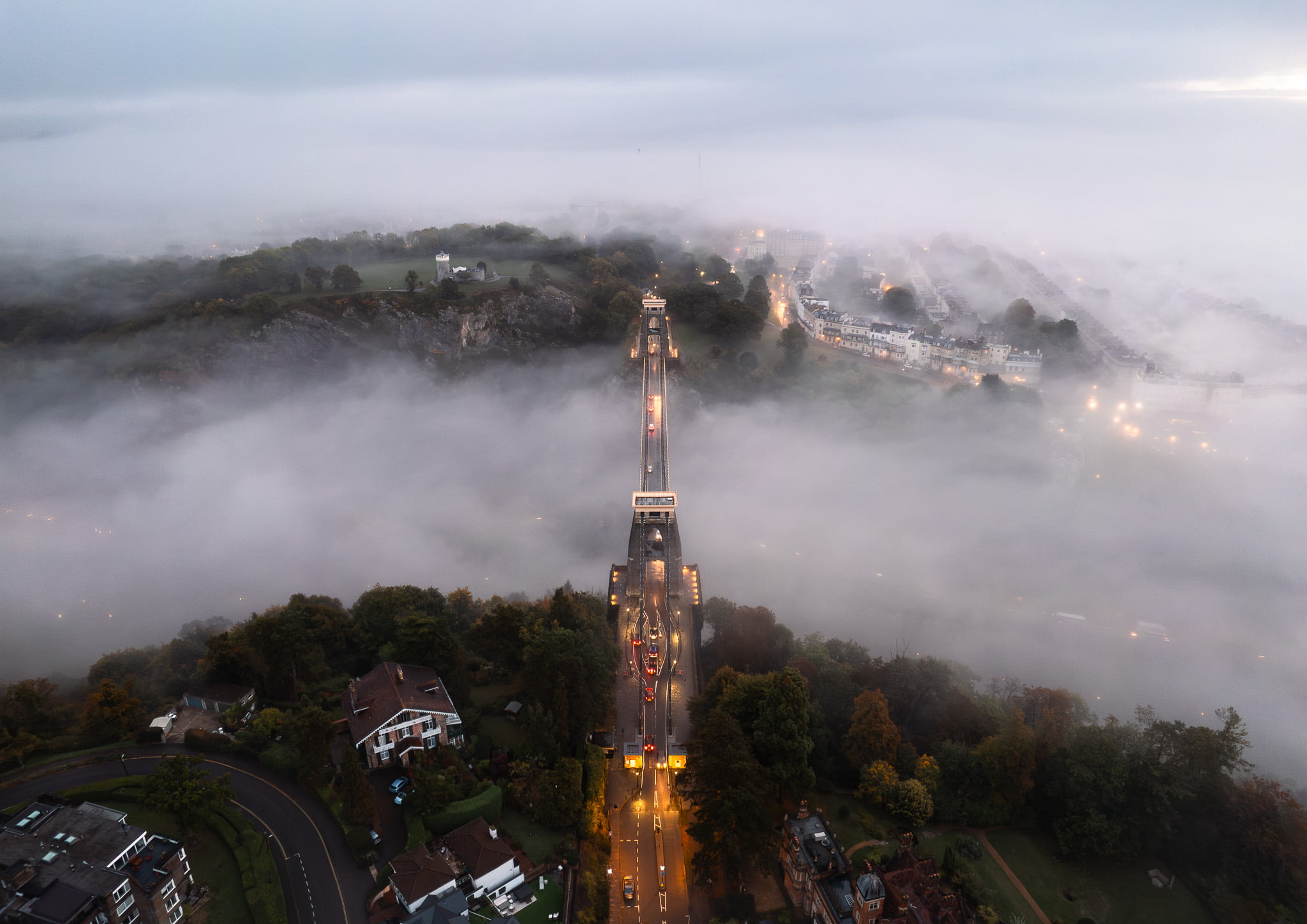
Clifton Suspension Bridge and the Avon Gorge
Bristol’s most iconic landmark looks brilliant in every season, but Winter brings something extra. A hoar frost on the surrounding trees of the Gorge and Leigh Woods, with the bridge looming through the mist, is genuinely one of the finest sights in Bristol photography. The sun rises in a particularly good position in Winter — head to the viewpoint by Clifton Observatory for the classic shot, or make your way down to Cumberland Basin for the reflection at high tide.

The Avon Gorge itself is worth exploring at this time of year – the bare trees reveal angles and compositions that are hidden in summer, and the low winter sun illuminates the limestone cliffs beautifully.

Clifton Promenade
This long avenue of trees is one of my favourite locations in Bristol at any time of year, but Winter gives it a completely different character. Once the leaves have dropped, the skeletal silhouettes of the trees line up beautifully in the early morning light. On a frosty morning with mist drifting through the avenue, it’s as atmospheric as anywhere in the city. Keep a close eye on the forecast and get here for the first light of dawn.
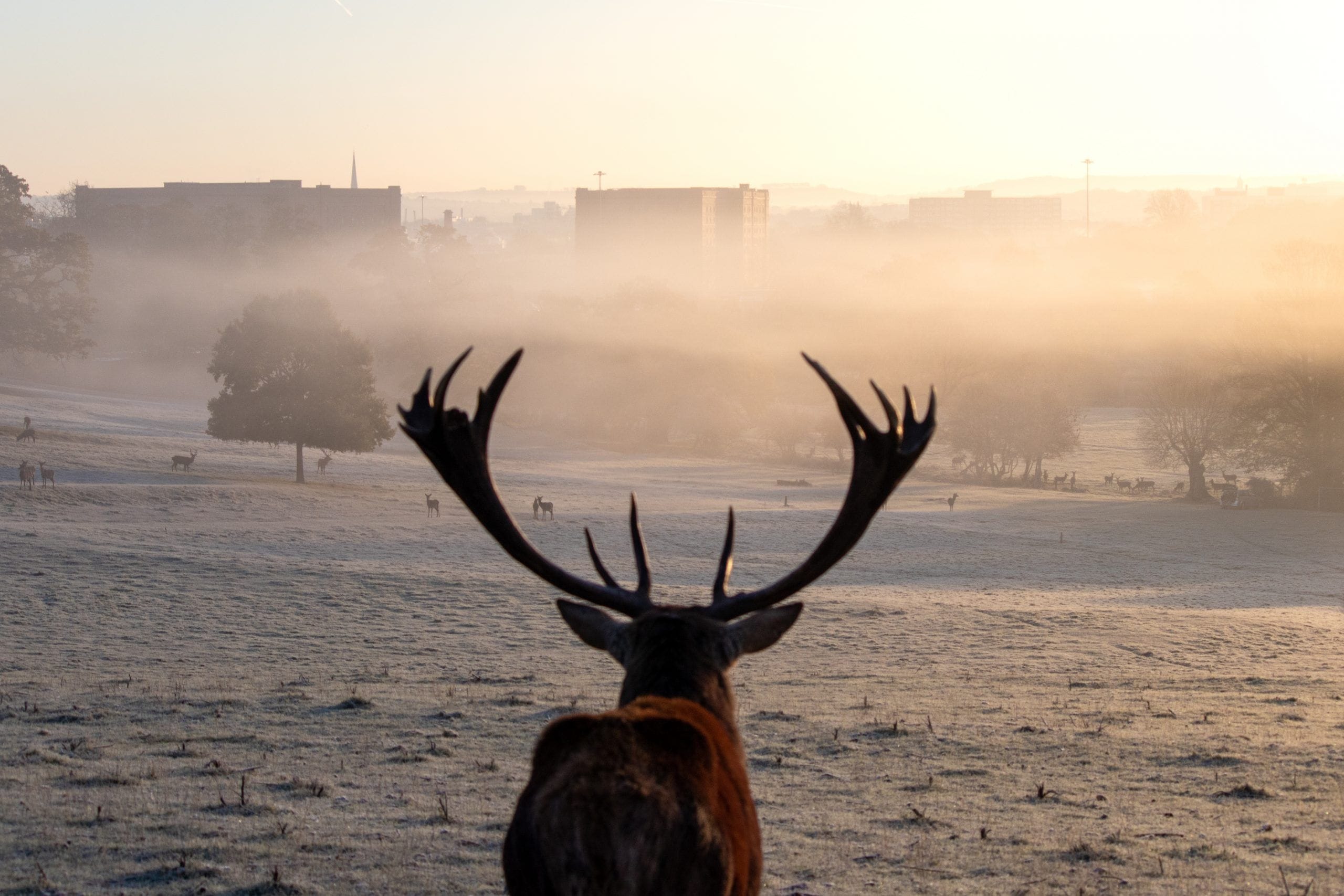
Ashton Court
If there’s any mist forecast in Bristol, Ashton Court is almost always your best bet. It’s a genuine mist trap – the combination of the lower ground and the surrounding trees means fog pools here reliably, often when it’s clear elsewhere in the city. In Winter, the red deer are also very much in evidence, and a stag emerging from the mist on a frosty morning is one of those shots you’ll keep coming back for. Go early, go often.
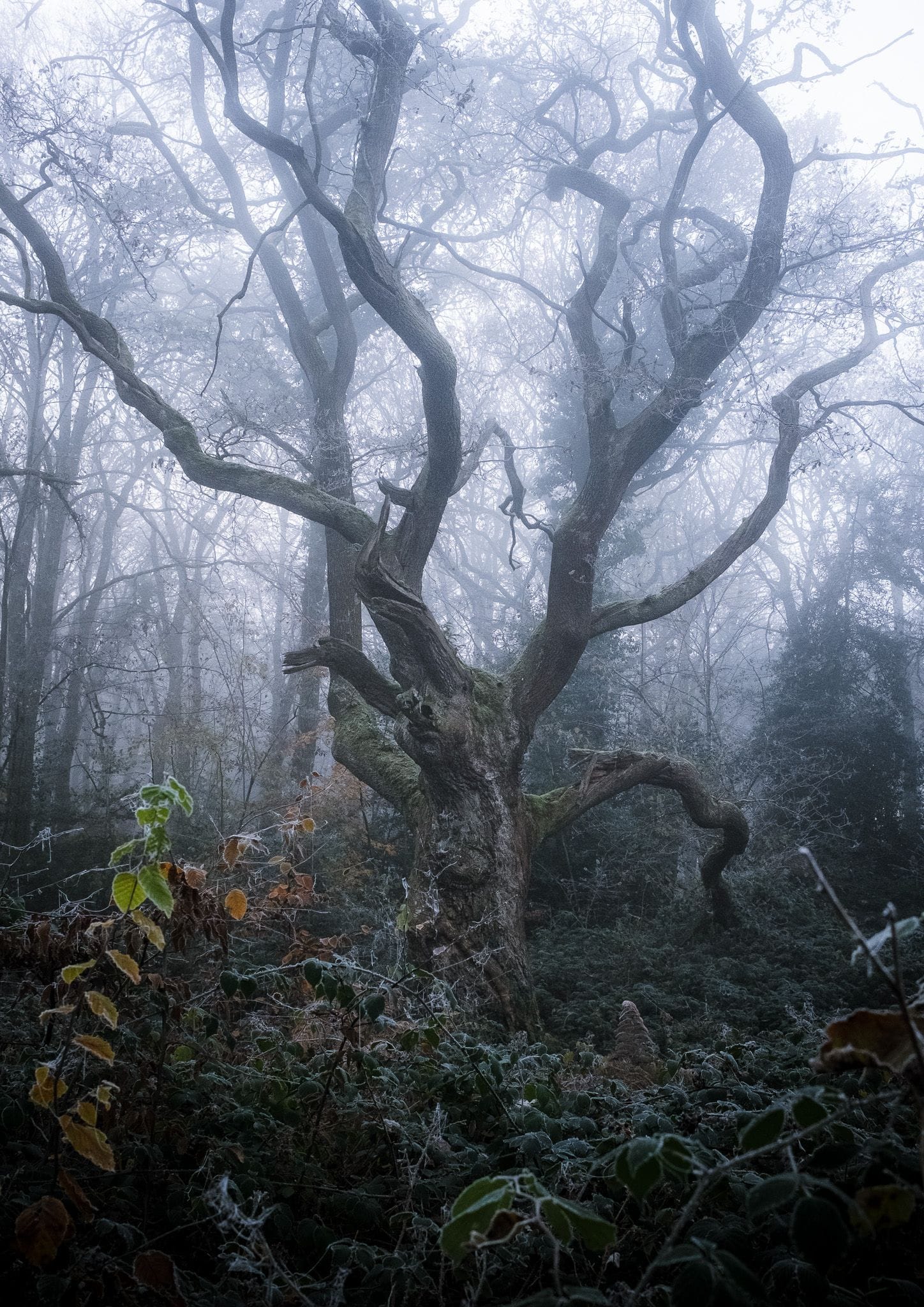
Leigh Woods
Just over the Suspension Bridge, Leigh Woods is a national nature reserve with some genuinely ancient and characterful trees. Winter is arguably the best time to visit – once the leaves are down you can see the full gnarly architecture of the older trees, and a hoar frost makes the whole wood look like something from a fairy tale. Follow the path from the first car park for the lookout point with views across to the Suspension Bridge. Take your wellies – it gets boggy.

Chew Valley Lake and Chew Stoke
The Chew Valley is one of those areas that just keeps giving, whatever the season – but Winter is when it really excels. The lake sits in a natural bowl that collects mist reliably, and the sun rises in an excellent position during the winter months. You can pull right up alongside the lake at sunrise and start shooting with minimal effort, which on a dark December morning is a genuine bonus.
Head up into the hills above Chew Stoke for a great elevated view of the village church rising through the mist, or take the lanes and pull over wherever the light catches something. The area around the Chew Valley is full of happy accidents on misty mornings – drive slowly and keep your eyes open. Blagdon Lake, just along the valley, is another excellent option, particularly for sunrise in winter.

The Somerset Levels
Winter is when the Levels really come into their own. The flooding that arrives in the colder months transforms the landscape completely – fields become shallow lakes, hedgerows are reflected in still water, and Glastonbury Tor rises above a sea of cloud and mist in a way that simply doesn’t happen in summer. Getting down low on the drove roads with a long lens on a misty winter morning, and letting the landscape do the work, produces some of the most extraordinary images you’ll capture all year.
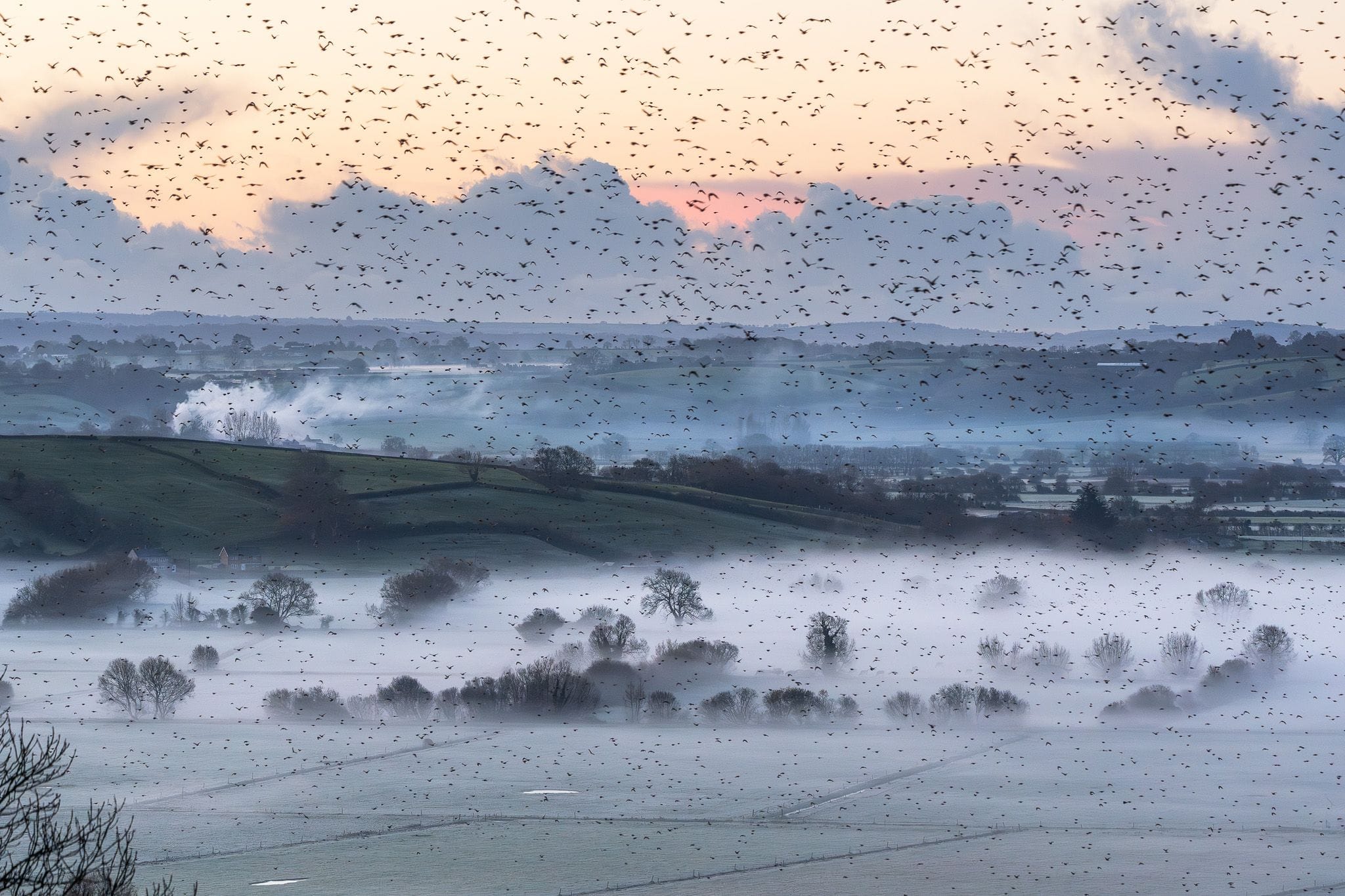
The starling murmurations are another huge draw. Ham Wall, Shapwick Heath, and Westhay Moor are among the best spots in the UK to watch tens of thousands of starlings swirl and dance at dusk – it is one of the most spectacular things you can witness with a camera in hand, and it only happens in Winter. Head to Walton Hill near Street for a great elevated view, or get down close to the reeds at Ham Wall for a more immersive experience.

Glastonbury Tor
The Tor at sunrise on a misty Winter morning is, in my opinion, one of the finest sights in English landscape photography. The combination of the ancient tower, the hill rising above a sea of cloud, and the low winter light is simply extraordinary. I have been here dozens of times and it never loses its magic. Park in town and allow plenty of time for the walk up – but also consider shooting it from a distance, from Wearyall Hill, Walton Hill, Deer Leap, or Brent Knoll, where the Tor becomes a distant subject in a vast, atmospheric landscape.
For a full guide to photographing Glastonbury Tor, see my dedicated post here.
Crook Peak and the Mendips
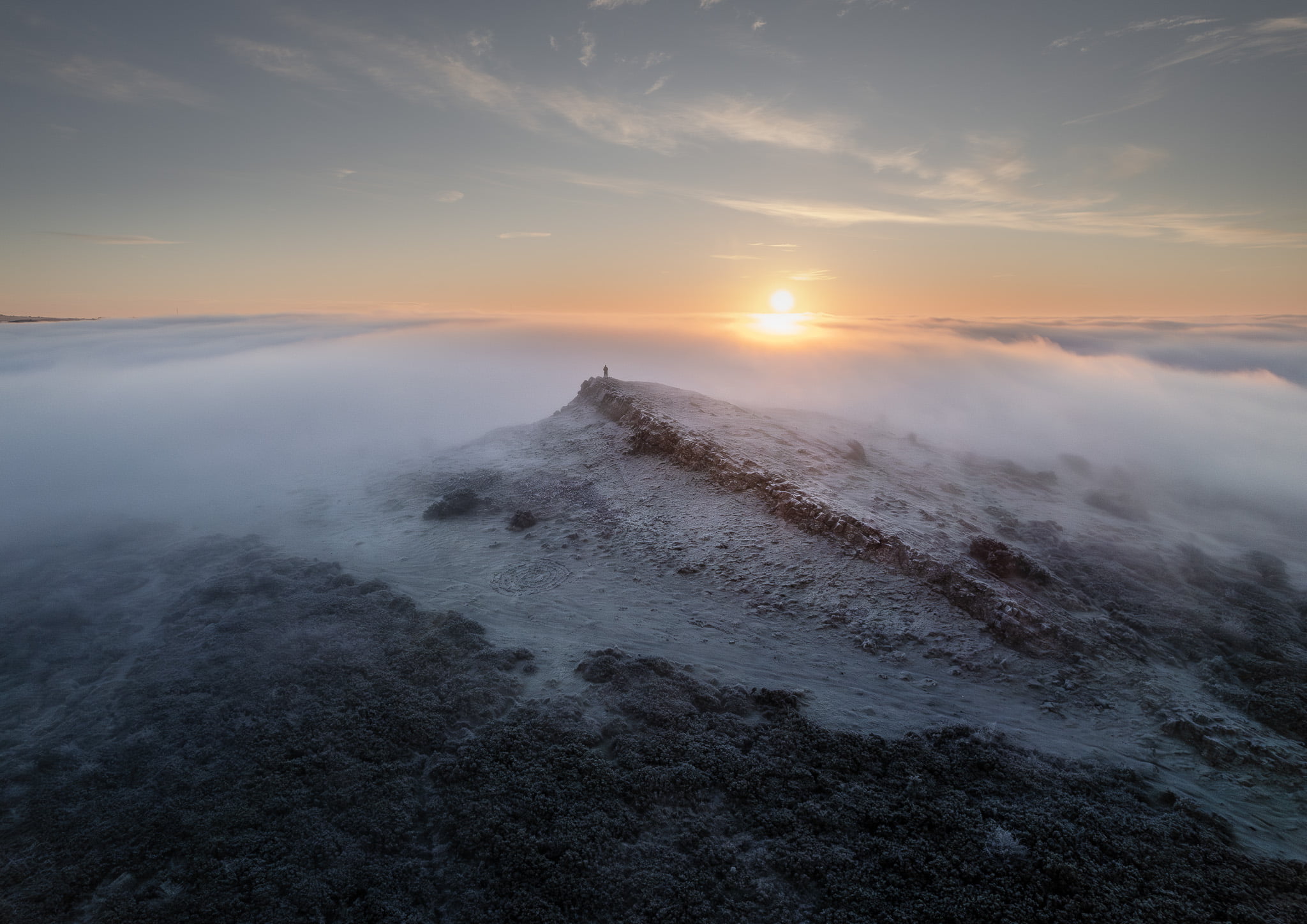
The Mendips are superb in Winter – particularly when there’s a cloud inversion, with mist filling the Somerset Levels below and the Mendip ridge rising above it. Crook Peak is my favourite spot for this: the pointed summit gives you a commanding view in every direction, and on the right morning you can stand above a sea of cloud with the sun rising behind you. The walk up takes 30-45 minutes and is well worth every step.
Deer Leap, just down the road, is another excellent Mendips winter location – particularly for views of Glastonbury Tor framed by standing stones. Stockhill Wood is also worth a visit in Winter; it catches the mist well and the coniferous woodland takes on a particular atmosphere in the cold months.
Burrow Mump
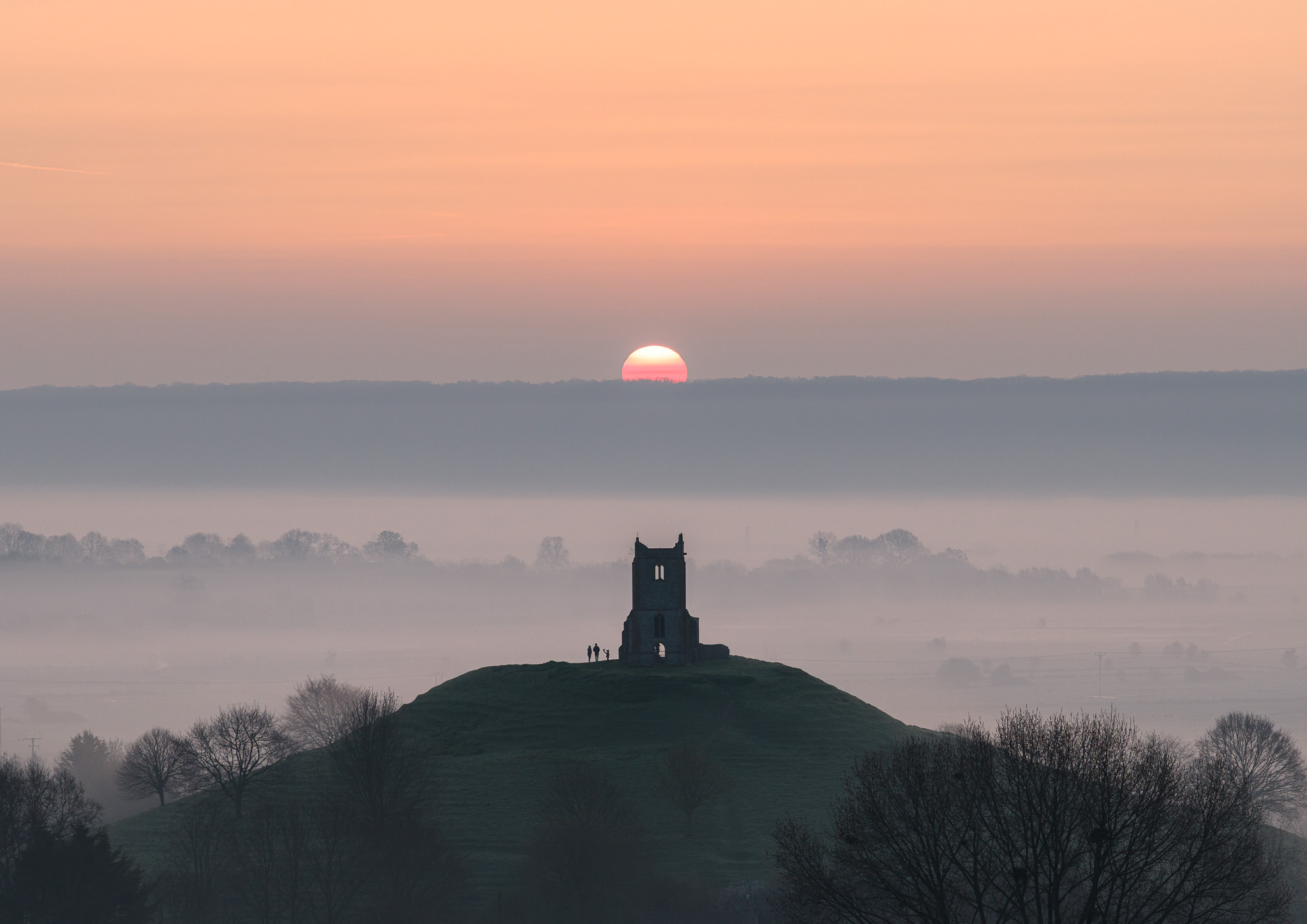
This small Somerset hill with its ruined church at the summit is a classic winter location. The flooded fields that surround it in winter make for wonderful reflections, and it doubles as a great astrophotography spot on clear winter nights when the Milky Way is less of a feature but the stars are sharp and clear. Take a wander along the nearby roads to capture the hill in its full context — a lone sentinel rising from the flooded Levels.
Brent Knoll
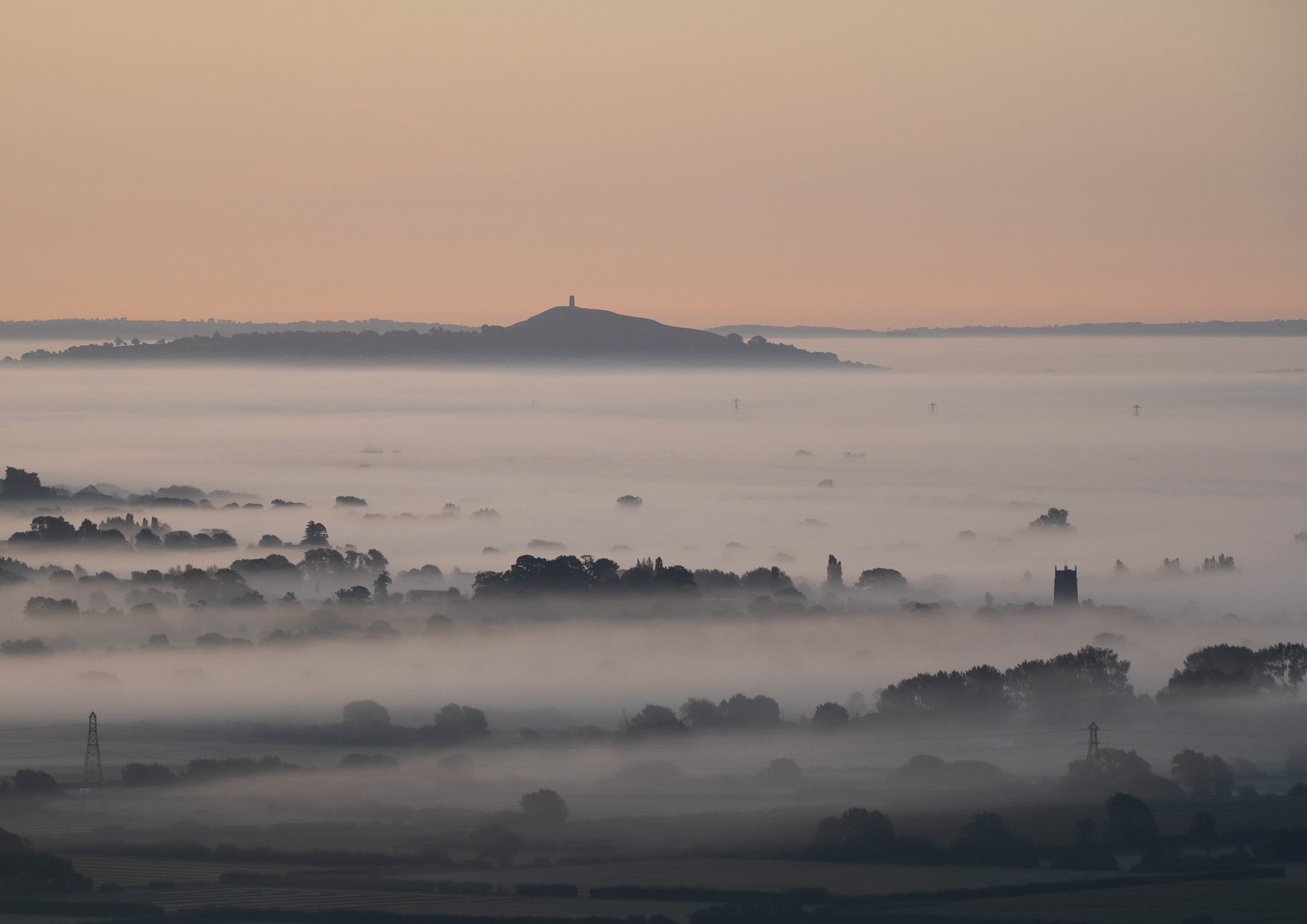
Rising from the Somerset Levels alongside the M5, Brent Knoll is a distinctive landmark that rewards the climb with panoramic views in every direction. In winter, with mist filling the Levels below, the views towards Glastonbury Tor and across to Wales are exceptional. A telephoto lens is essential here – this is a location for picking out details across a wide landscape, not for wide angle compositions.
Clevedon Pier and Marine Lake
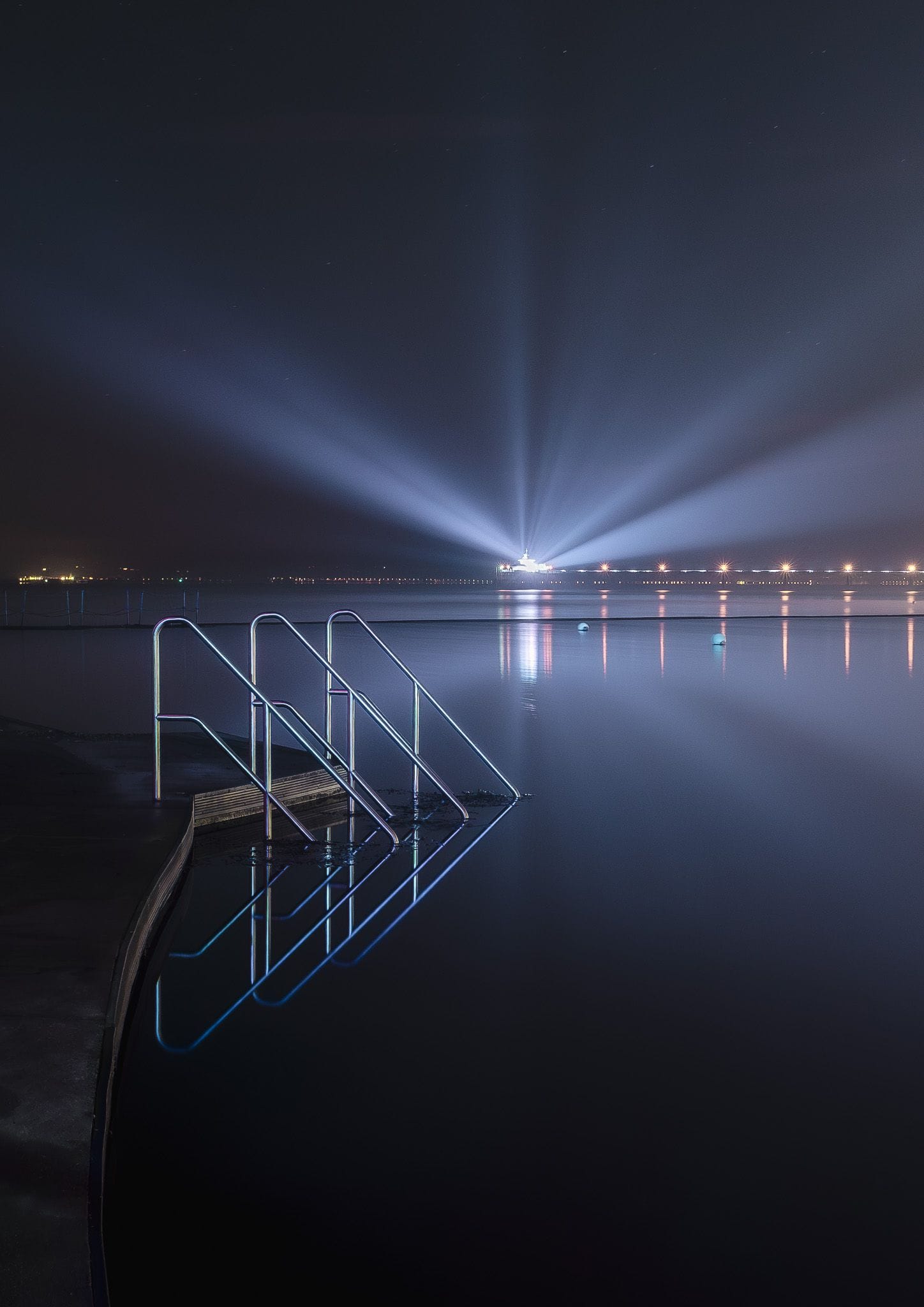
The North Somerset coast is underrated in Winter. Clevedon Pier – voted the most beautiful pier in England by John Betjeman – faces directly north across the Bristol Channel and is a great spot for long exposures on stormy winter days. Park close to the pier, get low for a wide angle shot with the large pebbles in the foreground, or walk further along the seafront for a view looking back.
Just along from the pier, Clevedon Marine Lake is a wonderful spot for minimalist long exposure photography when the tide is high enough to cover the steps – the result is an almost abstract, glassy surface with just a few elements emerging above the waterline.
Portishead Marina and Black Nore Lighthouse
Portishead is another great coastal option for Winter – the marina offers interesting reflections among the moored boats, while Black Nore Lighthouse just along the coast is perfect for a dramatic winter sunset. Use a wide angle lens here and embrace the stormy skies.
Stourhead and King Alfred’s Tower
Just over the Somerset border into Wiltshire, this area is one of the most mist-prone in the region and well worth exploring in Winter. King Alfred’s Tower – the fairytale folly at the edge of the Stourhead estate – looks magnificent in frost or mist, and the surrounding woodland and farmland is full of photographic potential. It’s a bit of a drive, but on the right morning it absolutely delivers.
The Wye Valley
Just across the Severn Bridge, the Wye Valley is spectacular in Winter – particularly when a band of mist fills the valley and Tintern Abbey emerges from it. The bare trees reveal the valley’s dramatic topography in a way that Summer foliage hides, and the low winter light catches the limestone cliffs and riverside beautifully.
Tips for Winter photography
Check the forecast the night before. The best Winter conditions – mist, frost, low cloud inversions – often form overnight and burn off quickly after sunrise. You need to be ready to move at short notice.
Watch the dew point. When the overnight temperature is close to the dew point, mist is very likely the following morning. This is the single most useful thing you can learn for predicting good conditions.
Dress for it. Standing still in a field at 6am in December is cold. Layers, waterproofs, and decent boots are not optional – and hand warmers in your pockets will save your life when you’re trying to operate camera controls with frozen fingers.
Shoot in the blue hour too. The blue hour before sunrise in Winter is longer and more dramatic than in summer, and the deep blue tones of a frosty dawn can be just as beautiful as the golden light that follows.
Don’t overlook overcast days. Flat grey Winter light isn’t ideal for landscapes, but it’s perfect for woodland photography – the even light brings out colours and textures in bark, moss, and frosted leaves without the harsh shadows you’d get in direct sun.
Looking for Winter prints?
If you’d like to purchase a fine art print from my Winter collection, please visit my print shop. I have a range of Winter images from across Bristol, Somerset and beyond, printed on 300gsm Somerset Photo fine art paper using archival pigment inks.
Where are your favourite Winter locations?
Have I missed any great local spots? Drop a comment below – I’d love to hear where you head in the colder months, and if you do go on a mission using this guide, please give me a shout out when you post your shots!
If you found this guide useful, you might also enjoy:
